How to Become a Successful Industrial Air Compressor Exporter
- Shanxi Jyc
- Jun 30
- 4 min read

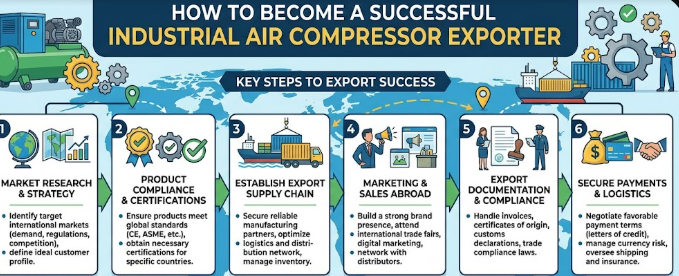
The global demand for industrial air compressors continues to grow as manufacturing, construction, mining, and processing industries expand across emerging and established markets alike. For manufacturers and trading companies looking to tap into this demand, exporting industrial air compressors can be a highly profitable business, but success in this space requires far more than simply shipping equipment overseas. It demands product knowledge, regulatory awareness, strong supplier relationships, and a genuine understanding of what international buyers actually need.
This guide walks through the key steps and considerations involved in building a successful export operation in the industrial air compressor sector.
1. Understand Your Product Range Deeply
Before you can sell industrial air compressors internationally, you need a thorough understanding of the products themselves. Buyers in different industries have very different needs: a construction company may need portable diesel compressors, while a manufacturing plant may require stationary rotary screw units with specific CFM and PSI ratings. Familiarize yourself with the full range of compressor types, including reciprocating, rotary screw, centrifugal, and oil-free models, along with their typical applications, maintenance requirements, and performance specifications.
A successful industrial air compressor exporter doesn't just sell equipment, they act as a technical resource for buyers who may not have the in-house expertise to evaluate specifications on their own. This consultative approach builds trust and leads to repeat business far more reliably than competing on price alone.
2. Identify and Target the Right Markets
Different markets have different demand profiles. There are areas where rapid industrialization is taking place and these require a medium-sized, dependable compressor for general manufacturing. But others, especially in an oil and gas or a mining-based economy, require units with high power output and extreme durability. Thoroughly investigate the potential market your research is targeting, including aspects such as: Industrial growth trends, Infrastructure development, Rules and regulations for imports and existing competition.
Trade data platforms, industry trade shows and local distributor networks can be useful tools for finding new markets and which product categories are not represented in the area.
3. Build Strong Relationships with Reliable Manufacturers
Your reputation as an exporter is only as strong as the products you're selling. Partnering with manufacturers who maintain consistent quality control, transparent specifications, and reliable production timelines is non-negotiable. Before committing to a manufacturing partner, visit production facilities when possible, request quality certifications, and ask for references from other international buyers they've worked with.
Establishing a small number of dependable manufacturing relationships, rather than spreading thin across many unverified suppliers, generally leads to more consistent product quality and fewer disputes down the line.
4. Master Export Documentation and Compliance
International trade involves a significant amount of documentation, and mistakes here can delay shipments, trigger customs penalties, or damage relationships with buyers. Successful exporters develop a solid working knowledge of:
Commercial invoices and packing lists
Certificates of origin
Bills of lading and shipping documentation
Import/export licensing requirements for target countries
International compliance standards relevant to industrial equipment, such as CE marking for European markets or relevant ISO certifications
Working with an experienced freight forwarder or customs broker early on can help you avoid costly errors while you build internal expertise.
5. Price Competitively Without Undercutting Quality
International buyers are likely to be quoting several exporters, even from other countries. Price is important, but providing low quality service for a low price often leads to warranty claims, spoiled reputation and lost repeat business. Rather, emphasize the value in your message: tell customers why your products and service are worth the money, whether it's better quality construction, prompt delivery, superior after-sales service, or extensive technical documentation.
Consider payment options like letters of credit or payment in stages for larger orders to also increase the attractiveness of your offer without compromising your margin.
6. Provide Strong After-Sales Support
One of the biggest differentiators between exporters who build lasting international relationships and those who don't is after-sales support. Industrial buyers need confidence that spare parts, technical support, and warranty service will be available even after the sale is complete. Establish clear processes for handling parts requests, technical troubleshooting, and warranty claims across time zones and language barriers.
Exporters who invest in this area consistently see higher rates of repeat orders and referrals, which ultimately matter more to long-term profitability than any single transaction.
7. Leverage Digital Marketing and B2B Platforms
Modern industrial buyers research suppliers online long before making contact. A strong online presence, including a well-optimized website, detailed product specifications, and visibility on B2B platforms like Alibaba, Made-in-China, or industry-specific directories, significantly expands your reach. Search-optimized content that addresses buyer questions directly, such as sizing guides, comparison articles, and application-specific recommendations, helps establish credibility and capture demand from buyers actively searching for solutions.
Trade shows and industry exhibitions also remain valuable for building face-to-face relationships, particularly in markets where personal trust plays a larger role in purchasing decisions.
8. Stay Adaptable to Market Changes
Currency fluctuations, shipping costs, tariff changes, and shifting industrial demand all impact the export business. Successful exporters monitor these factors closely and build flexibility into their operations, whether that means diversifying target markets, adjusting product mix, or renegotiating supplier terms as conditions change.
Final Thoughts
With a blend of product expertise, robust manufacturing collaborations, proactive compliance measures, and a dedication to post-sales support, a venturing air compressor exporter can achieve success. They are not the exporters who are only bidding on price – they are the ones who become trusted technical partners able to respond to the particular needs of industrial buyers in a variety of markets in the long term. Building a robust export business for industrial air compressors requires laying the groundwork, but with the right measures in place, this endeavor can be a long-term, stable, and scalable venture that's more about ongoing relationships than one-off sales.


Comments